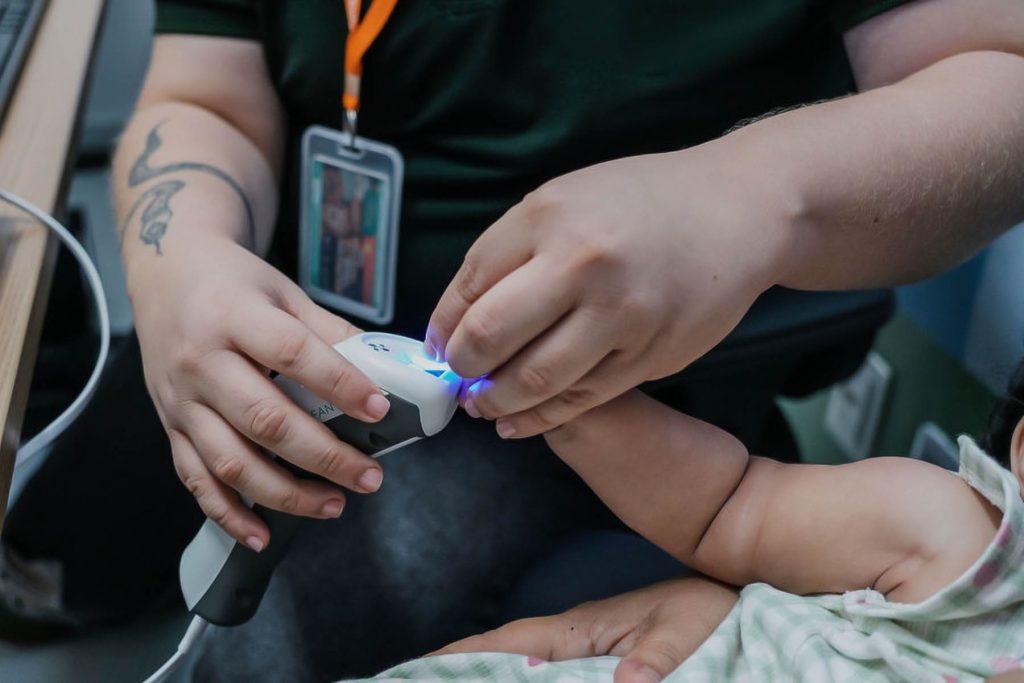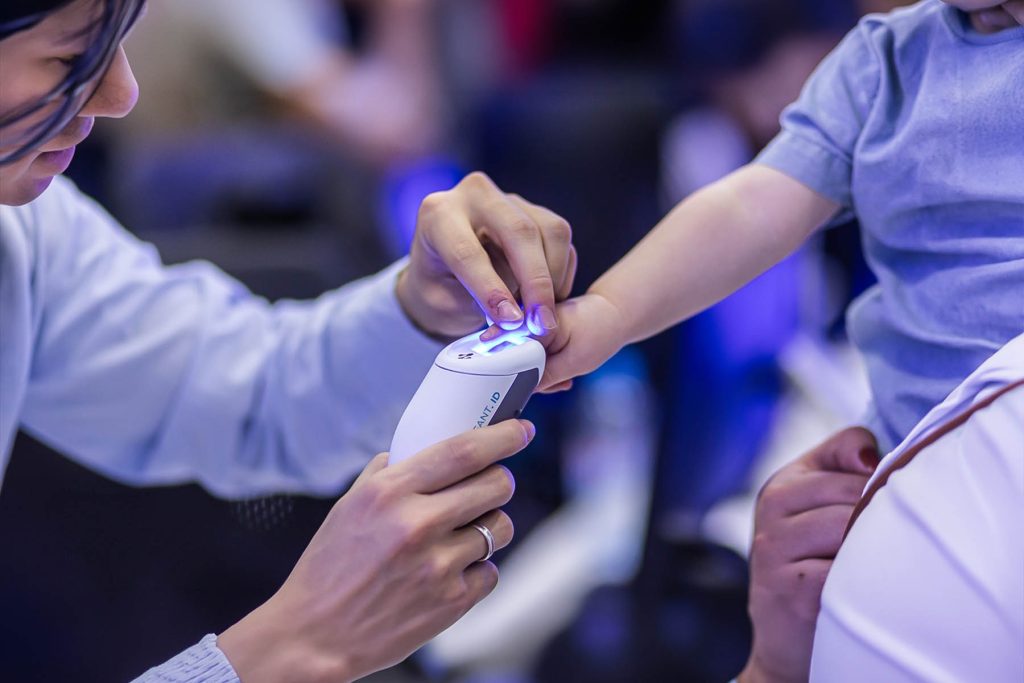

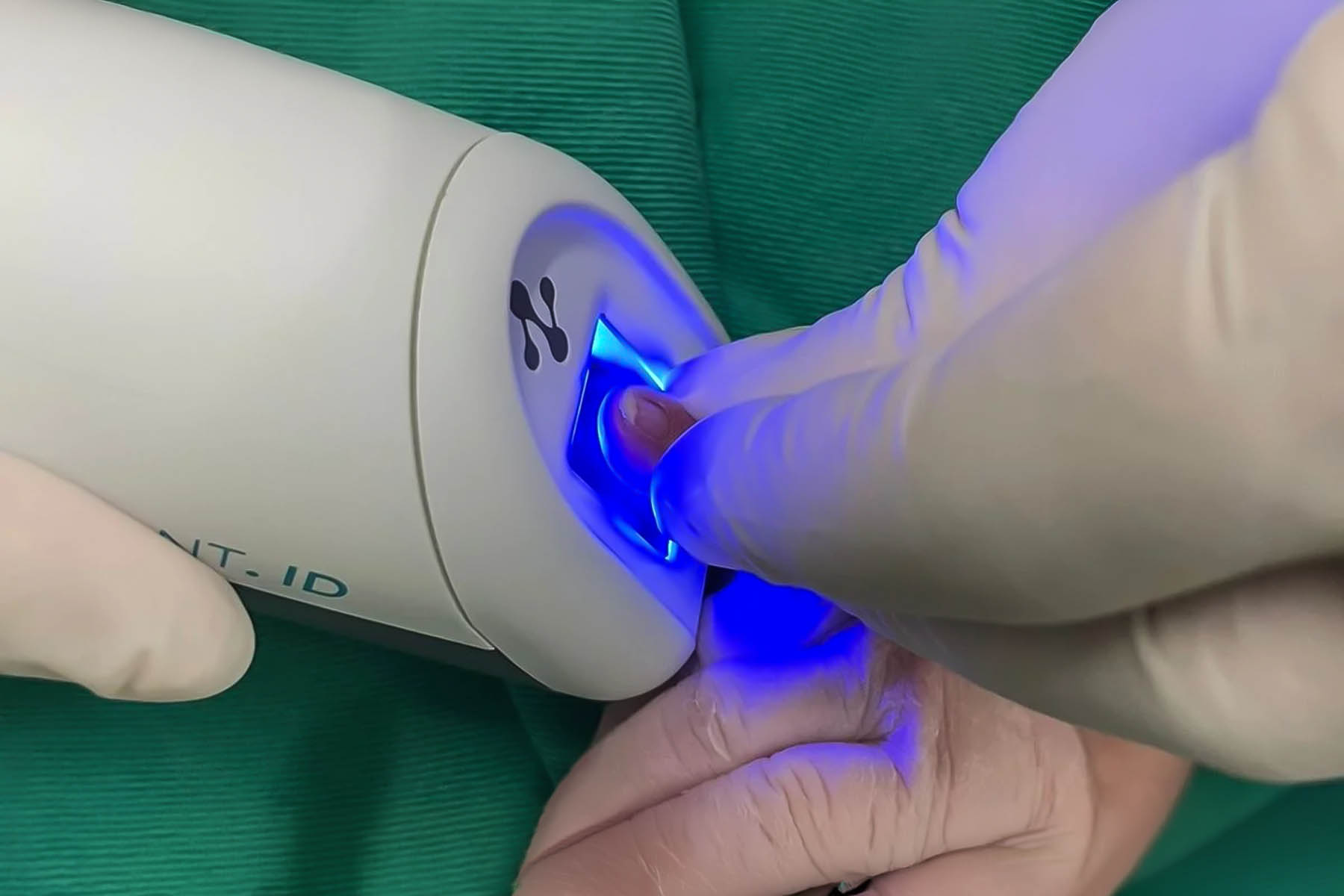
A Infant.ID It is a Brazilian company that does biometric identification for children aged 0 to 7 years. Created in 2016, its technology differs from traditional biometrics by being able to detect the nuances of babies' fingers. It is certified by the FBI and the US innovation agency NIST. The solution has recorded more than 320,000 biometric readings since its inception.
To read the fingerprints of a baby or a child, the device has a resolution of 5,000 DPI. This amount multiplies by ten the standard of 500 DPI found in document readers used by adults.
To process the data, the product combines the capture hardware with software. Regarding the feasibility of reading, the company representative explains the concept: “The standard is already there; it just basically changes in scale over the lifetime.”.
“We developed the entire product design in Brazil, from the hardware to the design and coding of the software. We patented and produced locally. It’s a 100% Brazilian company,” summarizes José Ricardo Tobias, executive director of Infant.ID, in a recent conversation with Mobile Time.

The reader assembly and the software writing take place in the city of Pato Branco/PR. In Brazil, the operation takes place in nine federal units, including Piauí.
Business model of Infant.ID
The company structures its business based on three marketing models:
- rent;
- charging for biometric capture;
- or the traditional sale of the solution.
The technology package includes the physical reading equipment (scanner), the operating license (SDK), and the software with the capture screen. The choice of format varies according to the availability of resources and the client’s financial structure.
The use of the system is divided into two fronts: health units, such as hospitals and maternity hospitals, and government agencies, such as identification institutes.
In maternity hospitals, the objective of safety establishes the bond between the mother and the baby minutes after delivery. In the government sector, collection begins the process of registering people in identification institutes.
In public agencies and identification institutions, the company focuses on the B2G model, with negotiations directed to the state departments of Public Security and to the identification institutions.
The solution is integrated with official document issuance offices, such as Detran and Poupatempo. The goal is to allow civil registration and the issuance of the National Identity Card (CIN) for children aged zero to 7 years old. The InfantID system only performs the collection and registration of biometrics, while custody, treatment, and storage of the information remain under the responsibility of the public authorities of each state. The government procurement of the technology occurs through bidding processes or by non-eligibility (when contracting is not feasible through competition between suppliers, whether due to exclusivity of the product/service, or due to the notable specialization of a professional).
In the case of public hospital and maternity centers, the biometric reader operates connected via a cable to desktop computers, laptops, or tablets. The software has a simplified interface for use by nurses and nursing technicians, who perform the capture. In state health networks, as in the operation in Piauí, the collection serves two parallel purposes. The first is to ensure “high security,” validating the mother’s biometrics with those of the newborn at the time of delivery and upon leaving the maternity center, which prevents the exchange of babies. The second is to use this same hospital capture to insert the child into the state civil identification database.
And in private networks and supplementary health insurance, InfantID offers the reader for maternity hospitals and health insurance plan operators. In addition to replacing and adding reliability to traditional control methods such as wristbands, biometric registration protects operators and customers by ensuring the exact identification of the child as the plan’s insured.
The reader assembly and the software writing take place in the city of Pato Branco/PR. In Brazil, the operation takes place in nine federal units, including Piauí.
Source: https://www.mobiletime.com.br/noticias/06/07/2026/infant-id-biometria/