
 English

The Hospital do Trabalhador, located in Curitiba, Paraná, has a trajectory marked by its importance and continuous evolution over the years. Inaugurated in 1928 as the Curitiba Central Isolation and Disinfecting Hospital, it was a direct response to the typhus and Spanish flu epidemics that plagued the city at the time. With an initial capacity of 52 beds, the institution was dedicated to the treatment of acute communicable diseases that could not be managed in a domestic environment.
In 1929, the hospital was renamed the Oswaldo Cruz Hospital, in honor of the renowned Brazilian health worker, and it became a crucial center in the fight against infectious diseases in the state of Paraná. This change in name and focus marked the beginning of a journey of growth and specialization that continues to this day.
The creation of the Worker Hospital Complex in 2019 represented a significant advancement in the integration of healthcare services in the region. With the inclusion of specialized units such as the
In the following decades, the Hospital do Trabalhador continued to adapt to the needs of the population. An important milestone was the opening, in the 1990s, of the Dr. Luiz F. Cajado de Oliveira Braga Maternity Hospital. This unit, equipped with an obstetrics center, a Neonatal Intermediate Care Unit (UCIN), and 38 beds in shared accommodation, quickly became a benchmark in maternal and pediatric care in the region.
In 1997, the institution officially became known as Hospital do Trabalhador, reflecting its expanded mission to address, in addition to emergencies and trauma, issues related to occupational health. This new identity reinforced the hospital’s role as a pillar of support for the working community of Curitiba and Paraná.
The Center for Comprehensive Care for Labiopalatal Fissure (CAIF) and the Paraná Hospital Rehabilitation Center have optimized public resources and improved the quality of care for the population.
The Hospital do Trabalhador stands out as a regional and national center of excellence in critical areas such as trauma, emergencies, worker health, and infectious diseases. The maternity ward, in particular, is recognized for the high quality of services provided to pregnant women and newborns. With cutting-edge technology and a highly qualified team, the maternity ward offers a humane and safe care, reaffirming the institution’s commitment to health and the well-being of families.
The history of Hospital do Trabalhador is a clear example of how continuous adaptation and the pursuit of excellence can transform an institution into a true pillar of public health. From its origins as a hospital for isolation to its current position as a reference hospital complex, Hospital do Trabalhador continues to play a vital role in promoting health and improving the quality of life of the population of Paraná and Brazil.
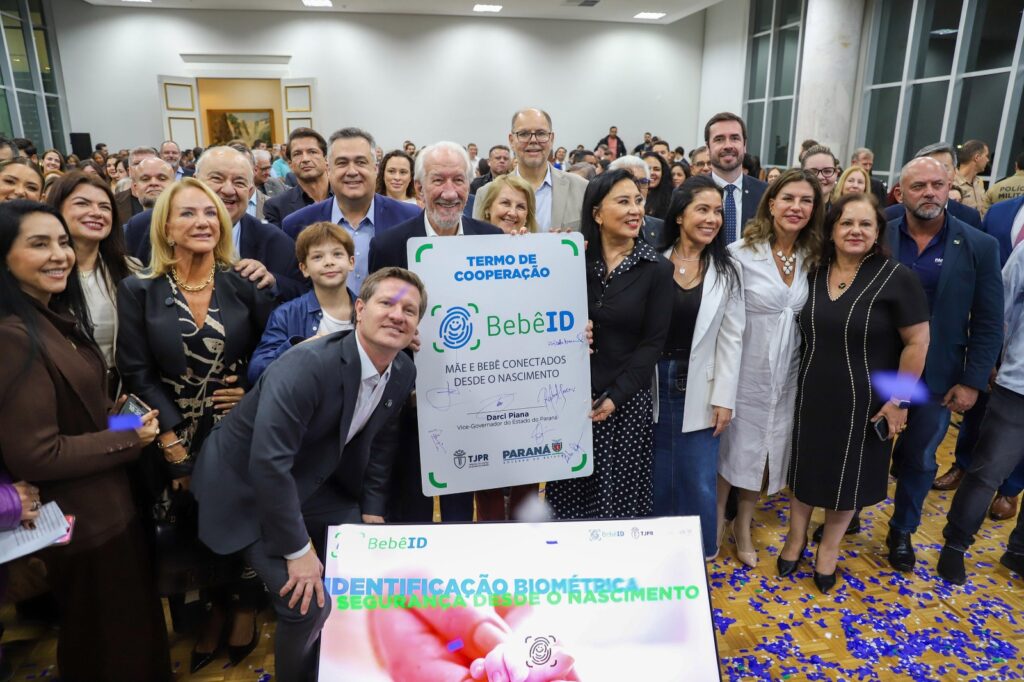
The challenge at Hospital do Trabalhador consisted of installing biometric equipment to capture and link the fingerprints of newborns (RNs) with their mothers. This project, in addition to increasing safety, complies with Brazilian legislation regarding biometric security for newborns in hospitals.
As in any new process, the implementation was gradual, starting with a few deliveries until all the nurses were properly trained and familiar with the equipment. After several trainings and awareness-raising activities, the project was fully implemented, covering 100% of the deliveries performed at the hospital.
In a second phase of the implementation of the biometric security technology, the equipment is now also used for entry and exit authentication, paving the way for the near future when physical security and vaccination control using biometrics will be implemented for children aged 0 to 5 years.
Since 2022, two biometric kits operating at the Hospital do Trabalhador have captured an average of 8 records per day, totaling more than 5,000 registered children. Biometrics ensure the bond between mothers and newborns, protecting against exchanges and guaranteeing the right to civil identification. This system already protects more than 5,000 children and benefits more than 10,000 families at the hospital today.
Be a part of this legacy too!